May 8, 2026
Embodied Forms: Artists Exploring Sculpture and Materiality at Future Fair 2026
From textile and ceramics, these artists are exploring sculpture’s limits in terms of gesture, material, and form.
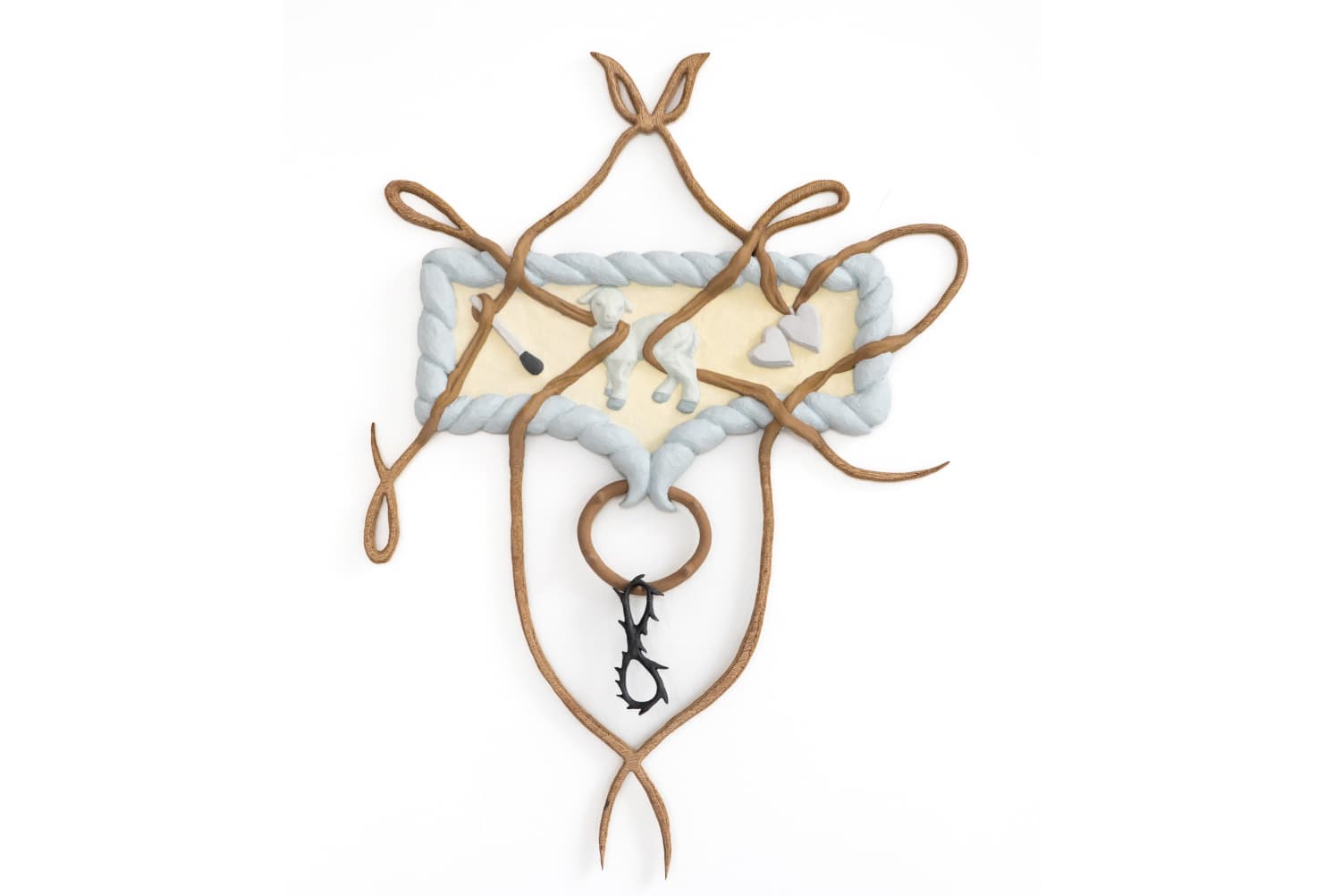
Erica Westenberger, Milk Sweet, 2023. Epoxy putty, flashe, wood, flocking, resin, 24 x 18 in. Courtesy of the artist and TINNEY, Nashville, TN.
Ellen Jong and Aura Friedman
Presented by Lola Gallery, Los Angeles, CA

Ellen Jong and Aura Friedman collaborate to create singular figurative works that merge their distinct practices. Jong (b. Queens, NY) investigates the intersections of body, material, and cultural lineage, transforming ink, a medium long associated with authority and tradition, into living, sculptural forms that evolve, decay, and leave traces with time. Friedman, a renowned hair colorist known for her technical and painterly approach, treats hair as both medium and surface, using pigment and gesture to shape identity and expression.
Isolina Minjeong
Presented by COURT TREE COLLECTIVE, Brooklyn, NY
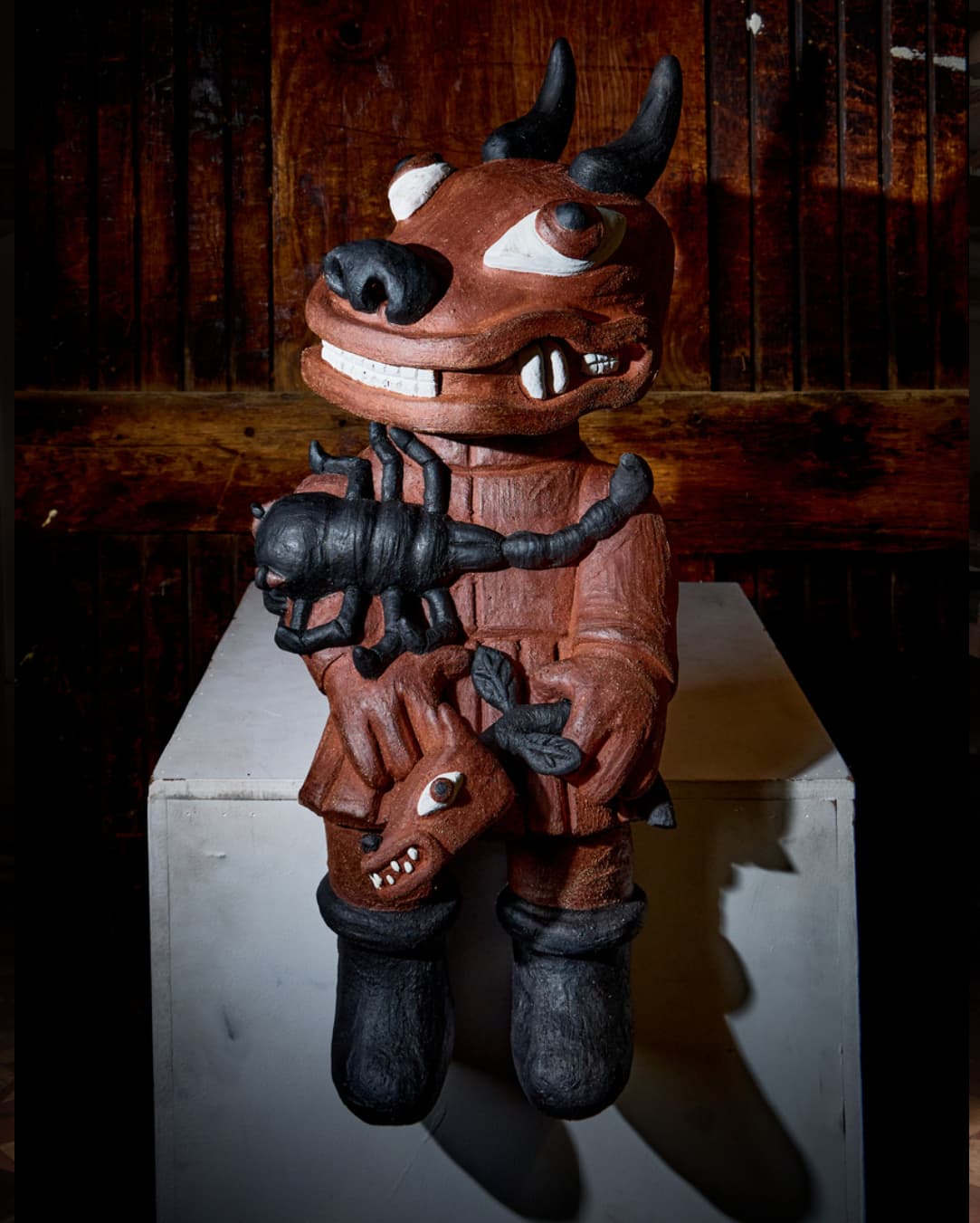
Isolina Minjeong is a New York City-based muralist and ceramic sculptor whose visual style blends manga imagery with ancient mythology. The series draws from funerary sculptures in ancient Korea and Peru, regions connected to the artist’s family history, where hand-built figures served as guardians and markers of passage. Rather than replicate these influences, Isolina reinterprets gods and animals through her affinity for cartoon imagery and character design.
Allegra Escalpon
Presented by Refusés, London, UK & New York

Esclapon makes ceramic vessels derived from photographic images of bodies in motion. She isolates fleeting gestures and translates them into abstract form. She uses glaze to activate her sculptures, guiding light to emphasize or withhold form and shape the viewer’s experience of the object. By manipulating light, her vessels bring movement back into the material, but treat gesture as a form of memory rather than a fixed representation.
Alison Croney Moses
Presented by Abigail Ogilvy, Los Angeles, CA

Alison Croney Moses draws from her family’s traditions of making and from her own experiences of adolescence, motherhood, and community-building. Her sculptures function as vessels for memory and embodied knowledge, grounding transformation in material and generational continuity.
Erica Westenberger
Presented by TINNEY, Nashville, TN
.jpg)
As my practice has evolved, I've moved towards materials that can hold both softness and strength - care and armor at the same time. I often use moldmaking and casting as a starting point to echo this balance. Casting out of cement, resin, or pewter invites permanence or durability, and I might treat their surfaces with a softly flocked texture or carefully painted silver leaf to adorn with delicacy.
Yehrim Lee & Chase Travaille
Presented by Laisun Keane, Boston, MA
.jpg)
Travaille’s sculptural vessels draw from early figurative traditions such as Venus figurines and Cycladic idols, where the body functions as a symbolic form rather than a portrait. Lee’s sculptures channel the energy of spring through dense floral forms and abundant blossoms. Travaille and Lee met as residents at the Archie Bray Foundation, where their processes began to overlap.
Adam Handler
Presented by Jakupsil, New York, NY
.jpg)
Handler’s pursuit of formal purity can be traced to his engagement with Art Brut. With a background in art history, he became drawn to a creative impulse free of specific intent, resulting in a formal language marked by spontaneity, vitality, and pre-civilizational sensibility similar to the raw quality of children’s drawings, pursuing untamed expression and the purity intrinsic to art itself.
Florencia Rothschild
Presented by Wishbone, Montréal, Canada

Florencia Rothschild was born in Buenos Aires, Argentina, and currently lives in Coatepec, Mexico. Her practice revolves around existential themes linked to the human experience, the body, and its (de)construction. Through fragmented and contorted forms that evolve into new possible bodies, she challenges notions of individuality and subjectivity, favoring a more fluid and collective vision of identity.
Valencia Valero
Presented by Wolf&Nomad, Miami, FL
.jpg)
Vanessa Valero is a Colombian-based textile artist whose practice spans hand-tufted tapestries, embroidery, watercolor, and mixed media. Her work explores nature as both a physical and inner landscape—ranging from monumental mountains to microscopic worlds—where questions of consciousness, existence, and interconnectedness unfold. Rooted in a meditative process, her works function as visual diaries that translate lived experience into color, texture, and form.
Kayla Dantz
Presented by Harsh Collective, New York, ny

Dantz uses both archival and original photographs in her practice, which she prints on fabric. The artist then dissects the images into strips and hand-weaves them back together, as a way of replicating the process of revisiting memories. In physically manipulating her film, Dantz upends the notion of photography as a two-dimensional medium and presents a juxtaposition of both frailty and resilience.
MORE POSTS
Rooted in New York: Galleries Across the State at Future Fair 2025
New York has long been a beacon for artists and galleries alike, and this year, Future Fair is proud to spotlight exhibitors from across the state. From the vibrant streets of Brooklyn to the creative hubs of the Hudson Valley, these galleries capture the diversity, energy, and independent spirit that defines New York’s art community today.